
财经郎眼
巴西一架小型飞机空中起火:撑起巨大救生伞后缓慢降落_我的网站

A | 8月26日消息,当地时间 25日上午,巴西米纳斯吉拉斯州,一架西锐Cirrus SR22单发小型飞机空中发生意外。 当天,这架飞机从贝洛奥里藏特的潘普利亚机场起飞,执行一趟转场检修飞行,飞行途中突发机械故障,机上发生小型爆炸,随即机身出现起火冒烟状况。 机上仅有一名29岁飞行员,危急时刻,飞行员启动飞机自带的CAPS整机降落伞系统,巨大的红白救生伞从机身顶部弹出,拖拽整架飞机,以较低速度向地面植被区域缓慢迫降。

An international metropolis on the shores of the East China Sea, a new migrant city rising from the Gobi Desert... China's cities embody a remarkable range of forms and efforts etched across a diverse range of landscapes, all of which is reflected in the everyday lives of ordinary people.
No two cities look alike, yet the standard by which we measure a city's warmth is familiar: Is there a place to rest safely? Is there a hot, decent meal to eat? Is there a corner where even the most vulnerable are treated with care and dignity? These seemingly small details are, in fact, what make a city truly moving.
The Global Times is launching a new series, "China City Talk." In this series, we explore cities across China, focusing on the everyday rhythms of life shaped by the human warmth of public policy and the quiet ways urban governance transforms individual lives. These stories offer one of the clearest windows into contemporary China.
Inside a historic red-brick building that houses a Party-mass service complex, run by a local grass-roots organization of the Communist Party of China (CPC), Kunqu opera enthusiast Li Qin rehearses with her retired friends. Many of the complex's spaces are open to the public, and in its elegantly old-fashioned hall, the arias of the classical opera float gently through the air.
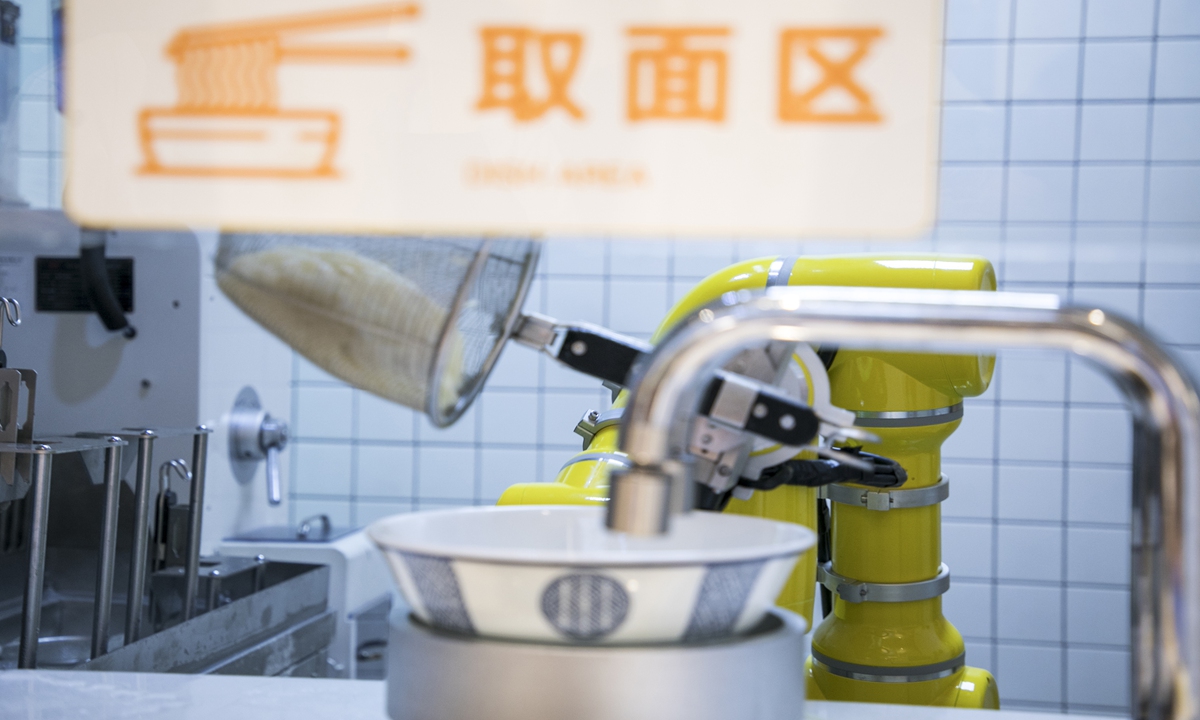
At an AI-equipped community canteen for the elderly, a robotic arm skillfully prepares bowls of noodles. Affordable dishes line the serving windows, and 62-year-old Ao Yongjian, who lives nearby, joins the queue as he always does, choosing the dishes he likes.
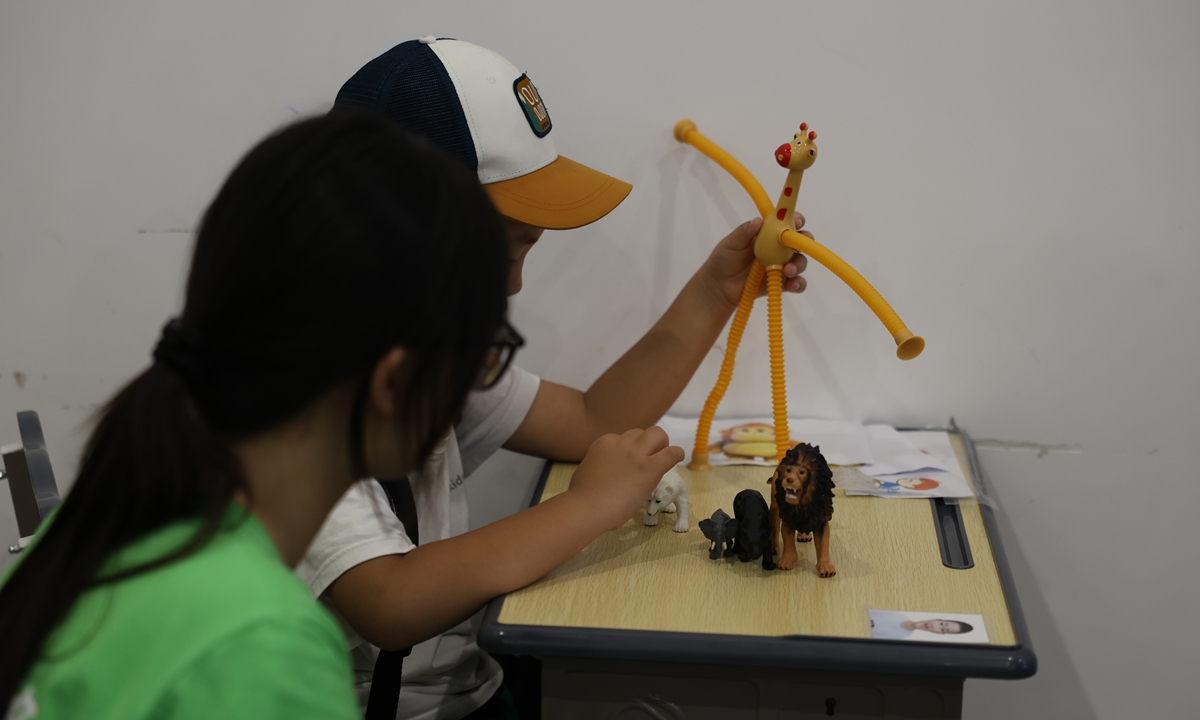
In a mixed-use commercial block, a class at a rehabilitation center for children with autism is suddenly interrupted by a sharp cry from 9-year-old Xiaozheng (pseudonym). A volunteer beside him gently takes his hand and comforts him in a soft voice.
In Shanghai, scenes like these unfold almost every day, in every corner of the city. From some 12,000 Party-masses service complexes to more than 500 community elderly canteens and the city's first summer vacation care program for children with autism, this metropolis is responding to the needs of every single citizen with remarkable care and precision.
A shared home
With its photogenic looks and downtown location, a Party-masses service complex in the Jing'an district's Shimen Road No.2 subdistrict has gone viral on social media, drawing visitors from near and far almost every day.
Set beside Suzhou Creek, the service complex is made up of three century-old, red brick villas. After being restored in September 2025, many areas were reopened to the public free of charge. Residents now come here to read, chat, dance, and even play chess with AI robots.
There is also a "care station," which provides convenient services for couriers, delivery riders and other workers on the go.
At noon, courier Wang Jun stopped by to warm up his lunch and take a short break. He told the Global Times that, because he is always busy, he used to eat lunch squatting by the roadside, or grab a brief rest in the lobbies of some companies. "Now that this place is here, I can eat a hot meal at noon and get out of the rain when it pours," he said with a smile. "It feels like home."
Delivery rider Wang Shuwei first came here on a rainy day while delivering food. On her period at the time, she found the restroom, only to realize she had forgotten to bring a pad. Fortunately, a janitor pointed out that the "care station" offered free pads.
"At that moment, I thought, how can something be this good?" Wang said. She has since become a regular. "The words 'Party-masses service complex' used to sound like something that had nothing to do with me. But after coming here, I realized there are real services here, and the staff are all very kind."
Behind these services lies carefully conducted surveys of nearby residents.
According to He Hanqing, director of the service complex, the renovation began after more than 1,000 feedback forms were collected online and offline. "Many residents wanted the complex to be closer to Suzhou Creek. They wanted a community canteen, while some young people wanted a shared office space, and parents wanted areas to play with their children," she said. They then integrated indoor and outdoor spaces into a single design, extending the renovation to include the surrounding Suzhou Creek promenade and the space beneath nearby bridges.
Today, the service complex receives an average of 4,000 visits a day. More than 30 percent of visitors come from outside the local community, 12 percent are tourists from elsewhere in China, and 7.7 percent are from overseas, according to data provided by the complex staff. In this highly urban complex, where rent for commercial land is extremely expensive, the place has become a shared home for many.
"We are not doing the math in terms of economic returns, but in terms of public sentiment," He Hanqing told the Global Times. "It is worth it to open up precious land to the public for free."
Warming stomachs and hearts
Around 11 am in Shanghai's Hongqiao subdistrict, the aroma of freshly cooked food drifts out of a community canteen. Named a "community canteen for the elderly," it is actually open to everyone, not just seniors.
Through a glass wall, a robotic arm in the back kitchen deftly picks up a tray of washed vegetables and delivers it into an intelligent cooking chamber. Within minutes, stir-fried cabbage is ready to serve. Braised pork, zucchini with scrambled eggs… more than a dozen dishes stand neatly lined up across the counter
Opened in 2021, this is one of Shanghai's earliest AI community canteens. The dishes here are prepared by machines and an AI system. According to the canteen's manager, Dong Yong, the system contains more than 3,000 recipes and can precisely regulate oil and salt use. Beyond its AI features, the canteen also offers full traceability for its ingredients, from procurement to processing.
What really puts diners at ease, however, are the prices. A vegetarian dish costs 4.5 yuan (67 cents), meat dishes range from 6 to 9 yuan, and some specialty items sell for 12 to 18 yuan, according to a price list on the wall.
Seniors aged 60 and above can enjoy discounts and subsidies. "A meal here costs me about 15 yuan on average - it's tasty and a good value," said resident Ao. Since retiring, Ao has come almost every day.
So how can the canteen turn a profit while charging below-market prices? He Junting, an official from the Hongqiao subdistrict, explained that the canteen is part of a government-supported partnership.
The local government provides the venue rent-free, allowing the restaurant to pass on the savings to customers. "That's why the prices are so affordable," she told the Global Times.
After choosing her dishes, a 70-year-old resident surnamed Du sat down at a table and chatted with the Global Times as she ate. Her husband is in the hospital, leaving her little time to cook for herself, so she comes here for lunch four or five days a week.
"The food here is healthy and the prices are friendly. I don't have to bother buying groceries or washing dishes myself," Du said. "The government really has solved an important problem for us older people."
During lunchtime, white-haired seniors, office workers and cleaning staff alike share the same dining space, giving the canteen a lively, down-to-earth atmosphere. Whether powered by AI or run in more traditional ways, these affordable community canteens can be found in nearly every neighborhood across Shanghai - warming both stomachs and hearts.
Much love and care
This summer, Shanghai launched a pilot program for children with autism in three districts, including Changning, marking the city's first attempt at such a summer daycare service.
The Palm Star Children's Rehabilitation Service Center, a professional rehab facility for children with autism, is located in Changning. There, 10 children attend the program, with each child paired with a volunteer.
In the classroom, laughter mixes with sudden cries. When one child has an emotional outburst, a volunteer gently calms him down; when another seems lost in her own world, the volunteer stays by her side, guiding her patiently.
Xiaozheng has been diagnosed with autism spectrum disorder. When his mother fell ill and his father grew busy caring for her, his grandmother was left to look after him alone. In previous summers, Xiaozheng could only stay at home. This year, however, the summer vacation program gave the boy somewhere to go.
Each session of the program lasts three weeks and costs only 600 yuan - less than one-tenth of what a commercial institution might charge. For families like Xiaozheng's, which are struggling financially, this fee is covered by the local government.
In Shanghai, children with physical, intellectual or mental disabilities also receive annual care and living subsidies.
Caring for children with autism is a lifelong process, and summer vacations have long been a gap in that support, said Chu Lin, director of the center. She explained that the program is the result of joint efforts from government subsidies, social organizations and donations from caring enterprises. "Every child has the right to education. By learning here and practicing simple daily living skills and social interaction, we hope their situation can gradually improve."
Among the volunteers is 21-year-old Kalahala Nuerbaishan, a university student majoring in special education. Before taking up her post, she and the other volunteers completed two rounds of professional training.
She shared that at the program, one boy under her care had been silent all day at first, but now he raises his hand to ask for tissues on his own. "Small progress like that gives me a great sense of accomplishment," the volunteer told the Global Times.
Lunchtime arrives. Accompanied by volunteers, the children wash their hands, line up and collect their meals. Some are already seated; others are still restless. Yet the special education teachers and volunteers remain patient, trying again and again to communicate with them.
In Shanghai, the most scenic stretch along the Suzhou Creek waterfront has been left for ordinary residents; the most advanced technology is being used to prepare three meals a day; and the most professional expertise is supporting the most vulnerable children.
This metropolis, as many people living there told the Global Times, is interpreting the meaning of "cities are built by the people, for the people" in the quiet, everyday acts of care that speak the loudest.
。

B | 从实拍画面可以看到,飞机在空中拖着长长的浓烟,在降落伞的悬吊下缓缓下坠,飞机落地之后,附近当地居民第一时间赶到现场,把飞行员从机舱救出,不多时,火情继续蔓延,整机被大火吞噬烧毁。 被救飞行员意识清醒,主要为吸入烟雾带来的轻伤,随即被送往当地医院接受救治,没有生命危险,地面也没有造成平民伤亡。

C | 据了解,这款西锐SR22的CAPS整机降落伞是标志性安全配置,如果遇到发动机失效、空中起火等无法挽回险情时,可以弹出大伞带着整架飞机减速降落,多次在事故中挽救乘员生命。 不过这套系统只能降低撞击速度,不能完全消除伤害,目前当地航空部门已经介入,调查本次空中爆炸起火的具体故障原因。
【本文结束】如需转载请务必注明出处:
责任编辑:落木
文章内容举报
。Current article:http://af4j9sg.panningbuquanchencaibingzhang.cyou/news/20260826_74351.html
Published on:20:26:57
 4月29日起 成都住房交易不再审核购房资格
 三大运营商在2018年加快和降低超额完成的费用:1200亿利润
 小熊猫家族里的“最萌年龄差”!
 公告前股价“二连板”,今天一字涨停,“文旅巨头”拟跨界布局半导体
 京东PLUS联名芒果TV会员,未醒目提示领取时效,权益过期拒绝退款
 商汤WAIC发布交付级AI全栈:模型、算力、机器人三线并进
我的网站最新内容
- ·就是给美国看的!伊朗不再藏着掖着,首次对外公开地下军工生产线,随风飘逸,原创 就是给美国看的!伊朗不再藏着掖着,首次对外公开地下军工生产线
- ·德罗赞迫不及待联手约基奇穆雷 来掘金冲击首冠
- ·“十五五”时期,全国将培育三万名农产品骨干经纪人,“十五五”时期,全国将培育三万名农产品骨干经纪人
- ·上市公司劝退应届生:离职or打螺丝 走只赔半月工资
- ·多地彩票店刮刮乐售空,福彩体彩回应:供不应求,无管控通知
- ·India’s energy strategy mindful of commitments
- ·市总工会举行孝道文化建设合作框架协议签约仪式
- ·武磊今夏回中超?西班牙人怎么看
- ·网传雪佛兰将退出中国 售后服务或由别克承接?
- ·情暖八一 微光送爱——九江、景德镇两地开展“微光行动”慰问退役军人
- ·抖音商城买的水龙头没收到货快递电话是空号
- ·2026年冬奥会设项调整 中国冰雪冬奥新周期迎来新挑战
- ·今年上半年中国重点钢铁企业累计营收3.05万亿元,今年上半年中国重点钢铁企业累计营收3.05万亿元
- ·存储短缺导致平板显示器市场下滑
- ·千兆字节释放RGB AIC固态硬盘:3480 MB/s顺序读取
- ·Gemini 3.5 Pro难产,谷歌先交了两张草稿纸
我的网站热点内容
- ·尼泊尔北部暴发山洪,中国驻尼泊尔大使馆提醒在尼中国公民和机构加强安全防范
- ·首次收录中国品牌车型!小米SU7 Ultra确认加入《GT赛车7》
- ·新加坡前七月入境旅客近千万,中国游客贡献显著
- ·Ganesh Chaturthi 2025: 10 दिनों तक गणेश भगवान को लगाएं ये भोग, कर्ज, रोग-दोष समेत दूर होंगे सभी दुख
- ·利好来了!A股大牛股公告!业绩暴增超124%
- ·Rocket fired at US forces in Syria
- ·Is Ranveer Singh in Legal Trouble for Allegedly Insulting Daiva Tradition?
- ·长时间戴耳机的后果有多严重?韩国一项调查显示,17%的青少年报告听力损失。
- ·'실종 허위종결' 경찰, 한달 뒤 경찰청장 표창 받아
- ·倒计时1天!山东省第二十六届运动会看点揭秘
- ·山海相约游人来!海南暑期旅游市场持续升温
- ·陈茂波:巩固提升香港国际航空枢纽地位
- ·消息称 Bose QuietComfort 第二代头戴式降噪耳机 8 月发布
- ·今年以来 消费品以旧换新政策惠及1.78亿人次
- ·总书记的人民情怀丨“营造风清气正的政治生态”
- ·奥克兰这些车牌惹事了,政府发函要求索回……